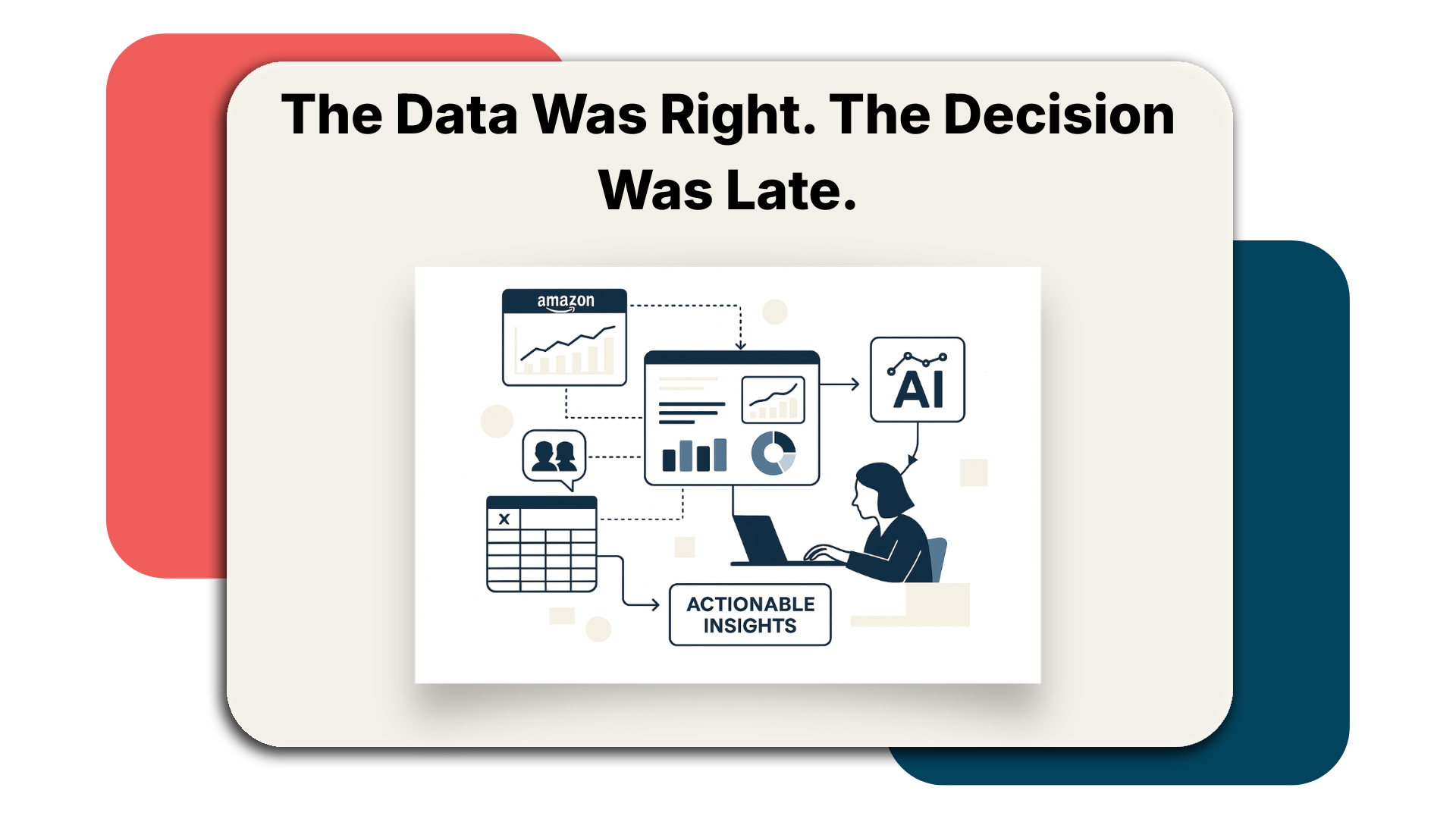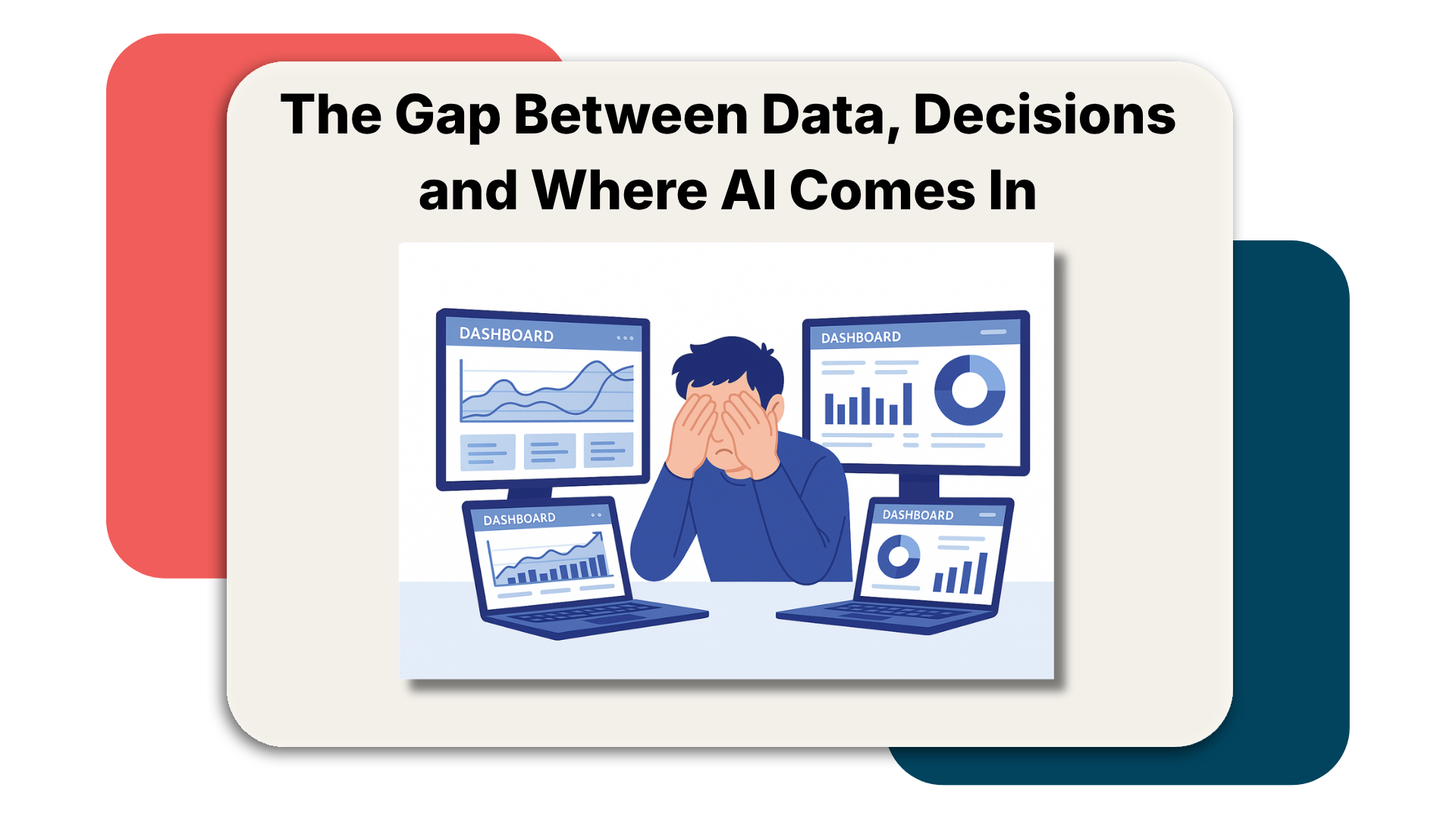
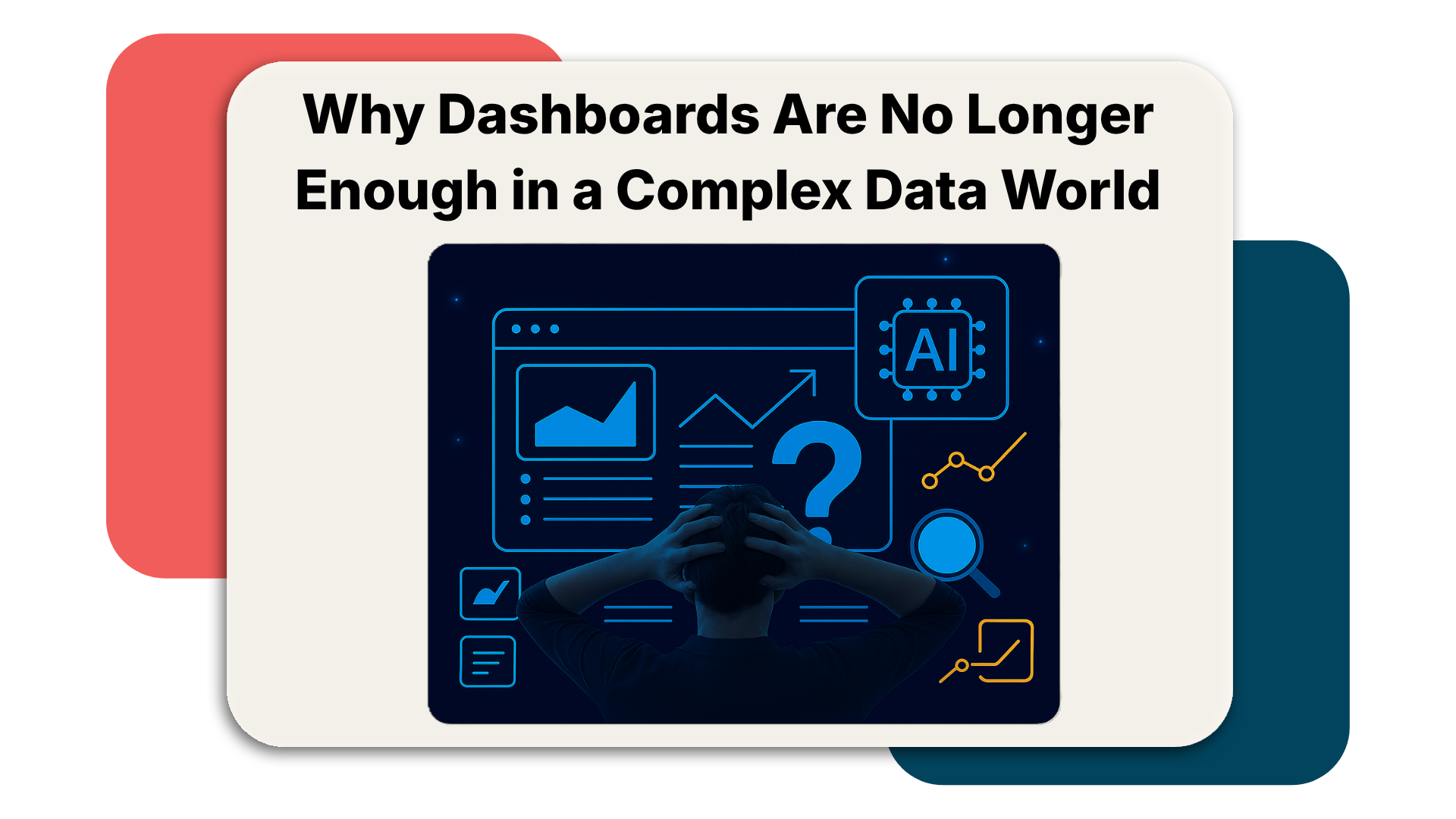
Most teams are not lacking data. They are lacking answers.
Reports are built. Metrics are tracked. Dashboards are checked every morning. And yet, when performance shifts, the same question keeps coming up:
What is actually causing this, and what do we do about it?
The Growing Gap Between Complexity and Capability
In environments like Amazon, complexity is constantly increasing.
 Multiple marketplaces, thousands of products, different account structures, advertising layers, content changes, and competitive dynamics all interact at high speed. What happens on Monday may already be outdated by Friday.
At the same time, the people responsible for managing this complexity, whether in marketing, sales, or operations, are expected to keep up.
This creates a fundamental gap:
- The system becomes faster and more complex
- The human ability to process and interpret it remains limited
Even experienced teams often find themselves reacting rather than acting.
Why Dashboards Fall Short
Dashboards were built to make data visible. They do that well.
But they were not built to explain what the data means. Two people can look at the same performance drop and reach completely different conclusions. Is it a content issue? A pricing shift? A competitor? The dashboard shows the drop. It does not show the cause.
This is where most analysis actually begins, not ends.
Understanding what is happening requires connecting different data points, identifying relationships, and translating observations into actions. This process is not only time-consuming, but also dependent on experience and context.
The Shift From Access to Interpretation
This is where AI becomes relevant.
Most people have already experienced this in everyday work. Summarizing information, connecting data points, explaining what something means. These tools do not just retrieve data. They interpret it.
The same shift is now happening inside business tools. Instead of asking "what data do we have?", the question becomes "what does this data actually mean?"
AI does not replace dashboards. It adds a layer between data and decision, one that helps teams move from observation to action without requiring an analyst every time a question comes up.
It helps to:
- navigate complex data environments
- identify relevant information
- connect different data points
- explain relationships and patterns
Most importantly, it reduces the effort required to move from data to insight.
Tasks that previously required switching between multiple reports, exporting data, and manual analysis can now be approached more directly.
What This Means for Daily Work
The practical impact is straightforward.
Less time searching for information, switching between reports, and trying to work out what a number means. More time understanding what is happening and deciding what to do about it.
Human judgment still matters. Context, category knowledge, and strategic thinking do not disappear. But the bottleneck between having data and acting on it gets removed.
In an environment as fast-moving as Amazon, that is not just convenient. It is necessary.
A Shift That Is Just Beginning
At emax digital, we see AI as a shift from data availability to data usability.
The challenge today is no longer access to information, but the ability to interpret it and turn it into meaningful action. As complexity continues to grow, this gap will only become more visible.
We believe that AI should not replace existing tools, but extend them. It should help teams navigate data, understand what is happening, and make better decisions without adding additional complexity.
Ultimately, the goal is not more data or more dashboards, but clearer answers and faster decisions.
Follow along as we explore how AI is changing the way teams work with data.