One Listing, Multiple Contributors
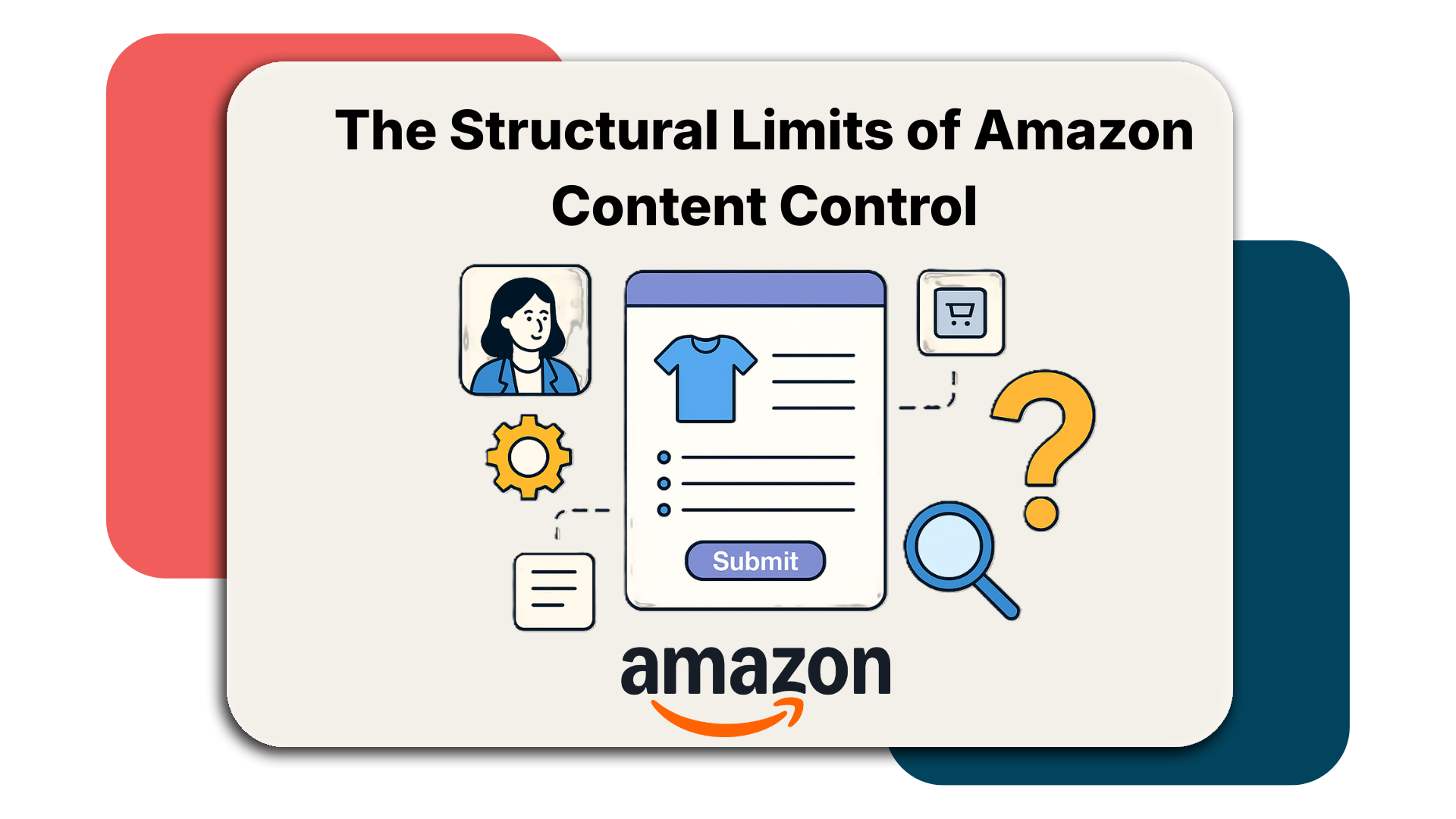
On Amazon, a product page is not owned in the traditional sense.
Different actors continuously feed data into the same listing.
As a result, the live product page can diverge from the intended version at any time:
- Images may revert to older versions
- Attributes may change
- Titles may no longer reflect the defined messaging
Even with Brand Registry, control is limited to influence rather than ownership.
|
Why Amazon Content Changes?
🙌 Amazon listings are collaborative by design. |
|

The Illusion of “Upload Once”
Many teams treat content management as a project: Create content → Upload → Done!
But on Amazon, content is continuously evolving.
New data enters the system, recommendations are evaluated, and updates can be applied without active changes from the brand.
The real challenge is therefore not creating content, but maintaining alignment between the intended product information and what customers actually see.
Why This Matters More Than Expected?
Content is often perceived as a marketing layer. On Amazon, it directly affects visibility and sales.
|
Traffic × Conversion = Revenue 🔑 Content enables keyword indexing 📊 Indexing enables ranking 📈 Ranking drives traffic 🌟 And once traffic arrives, content determines whether it converts. |

That means the basics matter:
-
Complete titles
-
Relevant search terms
-
Sufficient images
-
Clear bullet points
Before optimization begins, these fundamentals must be correct.
Many teams investigate performance first while the root cause sits directly on the product page.
The Real Challenge: Visibility
With only a few products, manual checks may work. With dozens, hundreds, or thousands of ASINs, they do not scale.
🔎 Typical Symptoms:
- Rankings fluctuate without clear reason
- Images revert to older versions
- Attributes suddenly disappear
- Different marketplaces show different content
If this sounds familiar, the issue may not be advertising or pricing, but content alignment.
Content issues become invisible until performance indicators react.
Because Amazon content can change at any time, content management becomes an ongoing process rather than a completed task.
Brands need to continuously answer two questions:
- What is currently live?
- Does it still match our intended version?
How emax digital Helps
At emax digital, our Content Monitor is designed to create transparency around live Amazon listings.
By continuously comparing defined master content with the live product page, Content Monitor detects deviations early and shows exactly which elements have changed.
Instead of manually checking listings, teams gain structured visibility into whether their product pages still reflect their intended content.
Without structured monitoring, content alignment simply does not scale.
Curious how continuous content monitoring could look in your Amazon setup?
Get in touch for a short walkthrough and see how it works in practice.