When Being Informed Isn’t Enough
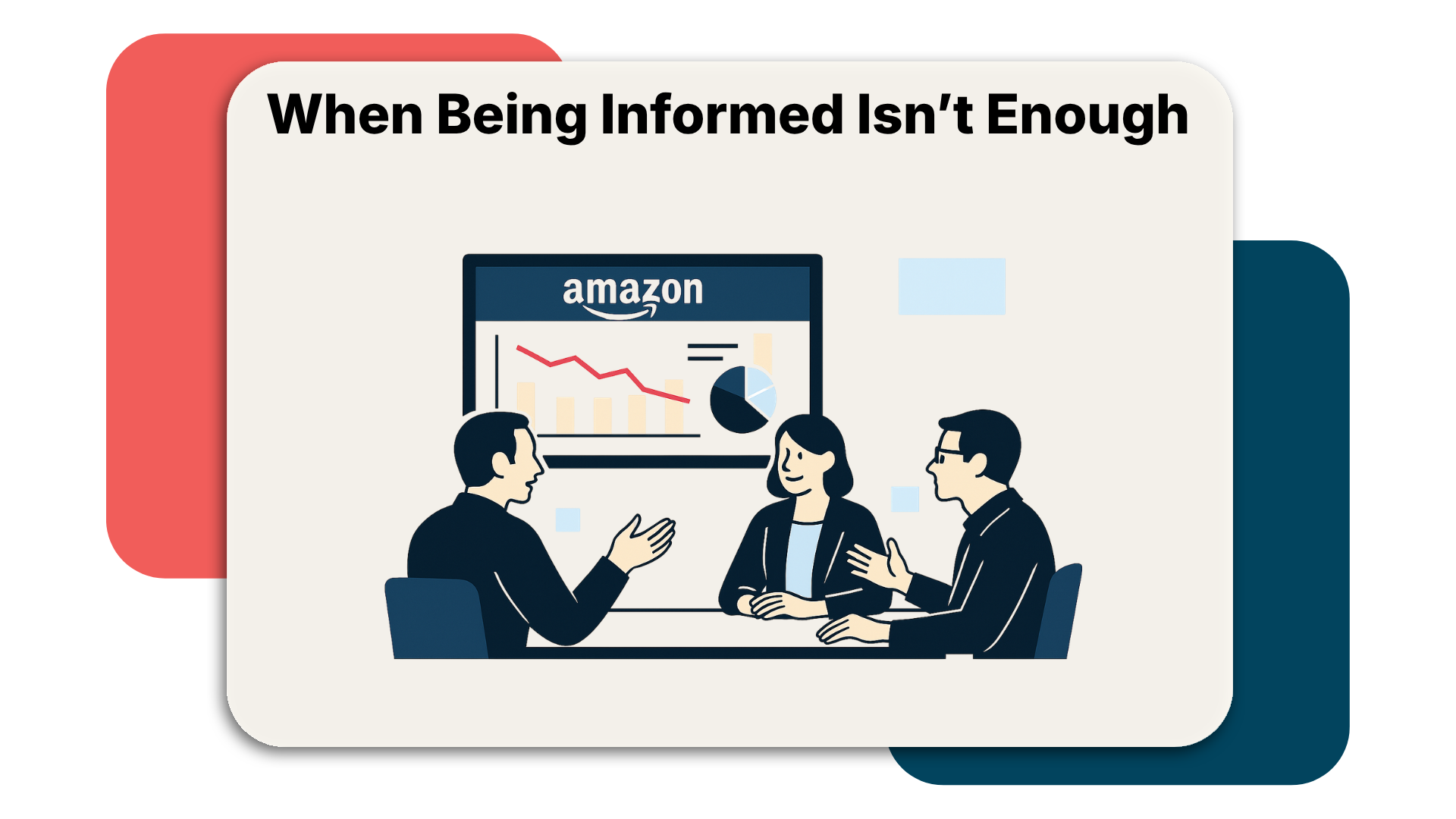
They make performance visible. Metrics are tracked. Trends are monitored. Teams know what is happening across products, campaigns, and marketplaces.
And yet, some of the most costly delays in decision‑making still happen in organizations with strong dashboards in place.
Not because teams lack data. Not because anyone is careless. But because visibility can sometimes feel like understanding.
The Most Comfortable Place to Be, and the Most Risky
There's a worse position than having no data. It's having data, checking it daily, and and seeing nothing that looks urgent.
This happens more often than teams realize. The numbers are green. The trends look stable. No one raises an alarm. And then, weeks later, something breaks that was there the whole time.
The problem wasn't the data. It was the confidence it created. That confidence is understandable. Dashboards are designed to provide it.
The risk appears when confidence removes the need to look deeper.
Dashboards Provide Visibility Not Interpretation
Dashboards are excellent monitoring tools.
They show what changed. They capture outcomes. They surface trends over time.
What they are not designed to do is explain why several things changed at once, or which change deserves attention first.
That step ‘interpretation’ still happens outside the dashboard.
When multiple signals shift together, teams are left to connect them manually: comparing views, checking other tools, and discussing possible explanations. This takes time, especially when nothing looks clearly broken.
What “False Confidence” Really Means
False confidence doesn’t come from dashboards being wrong. It comes from confusing visibility with readiness to act.
A dashboard can show that conversion dropped 3%. It cannot show that the drop started from a single traffic source. It cannot tell you that a competitor launched a new variation two days ago. It cannot flag that your best-performing ASIN lost the Buy Box for 6 hours overnight.
Each of these requires a different response. On dashboards, they often look the same: a line going down.
Why Teams Trust the Surface
Three patterns drive this:
Visibility bias. If a metric is on the dashboard, teams assume it tells the full story. Metrics that aren't displayed get ignored. Not because they don't matter. Because they're not in front of anyone.
Stability bias. When most numbers are stable, teams stop looking deeper. Stable doesn't mean healthy. It often means the problem hasn't reached the surface yet.
Familiarity bias. Teams check the same reports in the same order every week. This builds speed. It also builds blind spots. The things you always check crowd out the things you should be checking.
None of this is irrational. It’s how monitoring systems are meant to be used.
The Gap Between Seeing and Understanding
In the previous blog, we explored why decisions often come too late.
This is one of the reasons.
Teams don’t hesitate because they don’t care. They hesitate because the dashboard does not signal urgency. Everything looks normal until, suddenly, it doesn’t.
This isn’t a people problem. And it isn’t a dashboard problem.
It’s a design gap between seeing activity and understanding its meaning in context.
Where It Costs the Most
This gap shows up most clearly in areas where small changes have outsized impact:
Pricing and Buy Box. A product can lose the Buy Box for hours without triggering any alert. By the time someone notices, ad spend has been wasted on listings that couldn't convert.
Content changes. Amazon can suppress or alter content without notification. The dashboard shows a conversion dip. The root cause is invisible unless someone checks the live listing.
Competitive shifts. A new entrant or a pricing move from a competitor doesn't show up in your own dashboard. You see the effect. You don't see the cause.
In each case, the data exists. It just isn’t connected or prioritized early enough.
What Needs to Evolve
The answer isn’t dashboards. And it isn’t abondoning monitoring.
Dashboards should remain the foundation. But they need support where they’re not designed to operate.
Specifically, teams benefit from a layer that:
- onnects signals across sources,
- surfaces what’s unusual, not just what moved,
- and helps prioritize attention when several things change at once.
This turns visibility into direction.
From Feeling Informed to Being Prepared
Dashboards give teams visibility. That is the right first step.
The next step isn’t replacing them. It’s strengthening them with interpretation.
When teams can understand what matters before it becomes obvious on the chart, confidence becomes earned and action becomes timely.
Visibility is the starting point. Understanding is what moves decisions forward.
That's how the shift from monitoring to momentum begins.