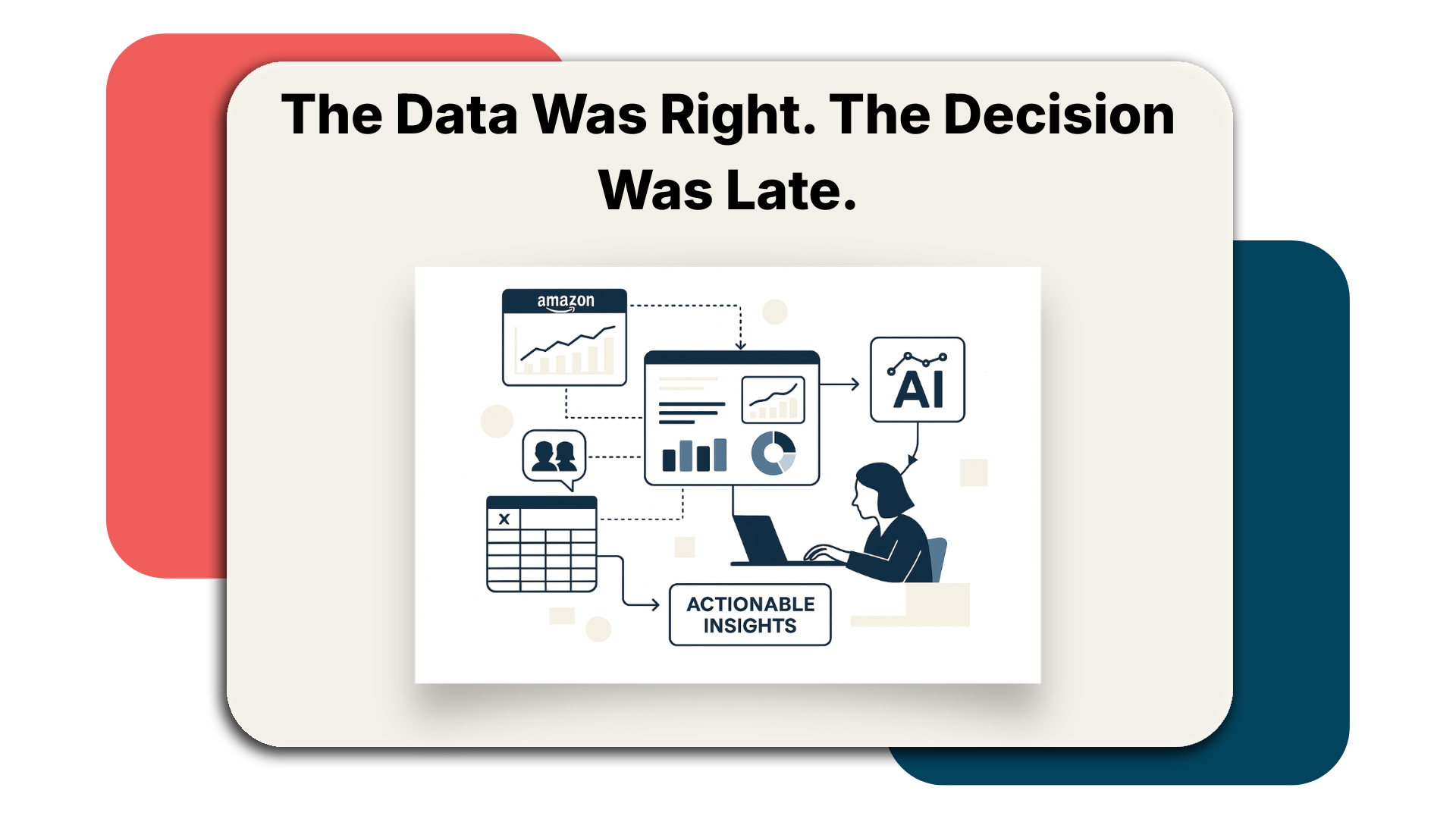
The Gap Between Data, Decisions and Where AI Comes In
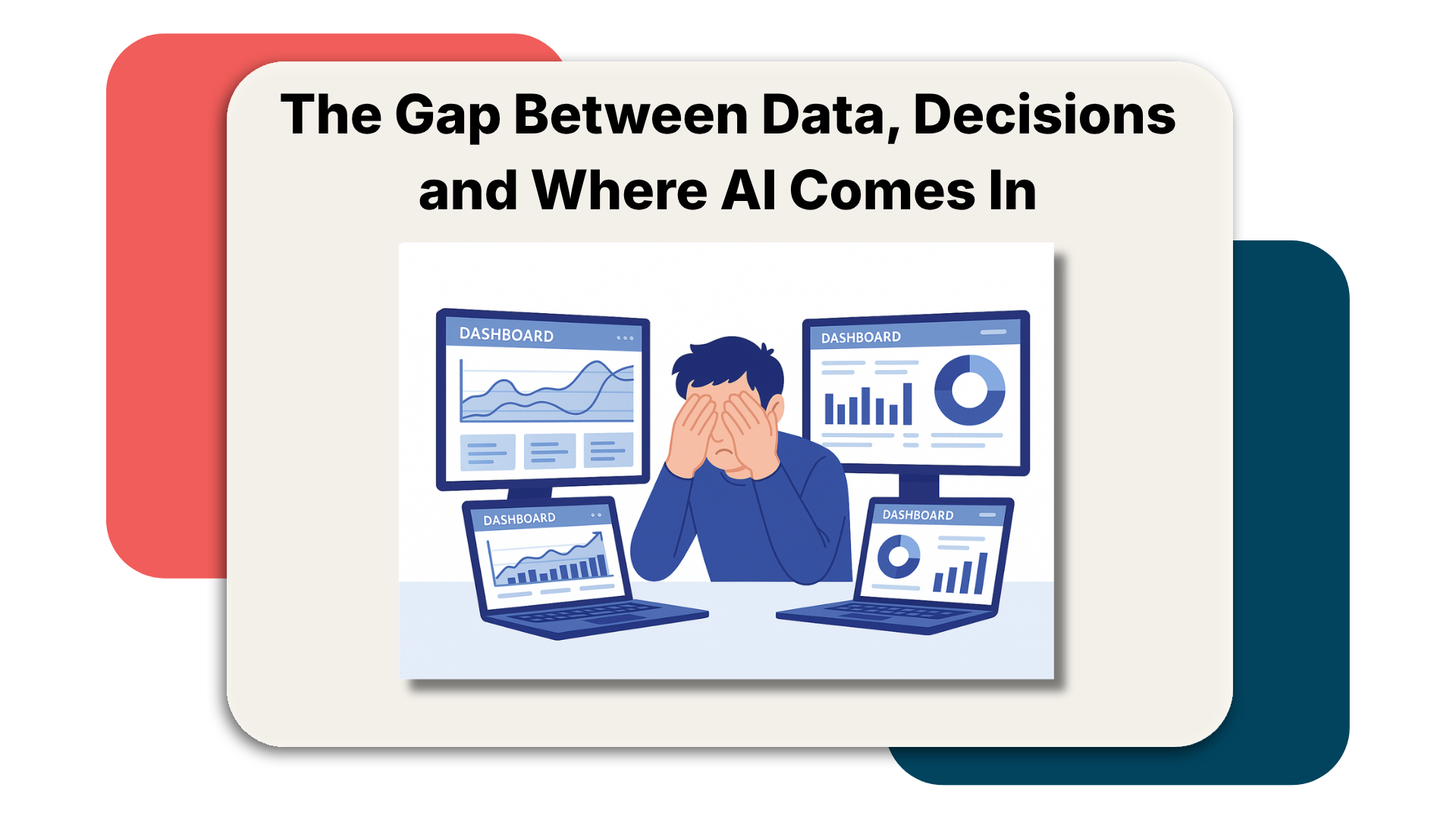
We don’t have a data problem. We have a decision problem.
Dashboards are in place. Metrics are tracked. Performance is visible across products, marketplaces, and campaigns.
And yet, when something changes, teams still hesitate. Not because the data is missing. But because the next step is often unclear.
Where the Gap Appears
The gap does not appear because data is unavailable. It appears in the moment a decision needs to be made.
A dashboard might show a drop in sales. Traffic may be stable. Conversion might be fluctuating.
But what does this actually mean?
Is it a pricing issue?
A content problem?
A stock limitation?
A competitive shift?
The data exists, but it does not explain itself.
From Observation to Action
Looking at data is not the same as acting on it.
To move from observation to action, teams need to interpret what they see. This means connecting multiple data points, identifying patterns, and understanding cause and effect.
What appears as a simple question often turns into a more complex process. Different reports need to be checked, time periods compared, and assumptions validated before any conclusion can be drawn.
This step, the transition from data to decision, is where most of the effort happens.
Why Decisions Get Delayed
This gap has real consequences in daily work.
Before decisions can be made, teams need to align on what the data actually means. Different stakeholders may interpret the same numbers differently, leading to longer discussions and uncertainty.
As a result, decisions are often delayed.
In fast-moving environments, this delay matters. By the time a conclusion is reached, the situation may have already changed.
The Role of Experience
Today, bridging this gap depends heavily on experience.
Experienced analysts know where to look, which signals matter, and how to interpret complex patterns. They can move more quickly from data to decision.
But this creates a bottleneck.
Not every team member has the same level of expertise.
Not every question can wait for expert input.
This often leads to slower processes or decisions made with incomplete understanding.
A Structural Challenge
This is not a temporary inefficiency. It is a structural challenge. As systems become more complex and the amount of available data increases, the gap between data and decisions does not shrink.
It grows.
More data does not automatically lead to better decisions. In many cases, it makes interpretation more difficult.
What This Means for Teams
The challenge is no longer collecting data or building dashboards.
The challenge is making data usable. Teams need to move faster from:
seeing what is happening → to understanding why it is happening → to deciding what to do next
Without getting stuck in manual analysis or long interpretation cycles.
Looking Ahead
If the gap between data and decisions continues to grow, the way teams work with data needs to change.
Not by adding more reports or more dashboards.
But by changing how data is interpreted and used in daily workflows.
Follow along as we explore how this gap can be addressed in the next article.