Once a mismatch is discovered, the next assumption seems simple:
Correct the content and the problem is solved.
In reality, this step often becomes the most time-consuming part of the process.
When Content Needs to Be Corrected
After a deviation is identified, the work begins.
Teams must prepare the correct version of the content, submit it to Amazon, and wait for processing.
⌛ In many cases, this means waiting up to 24–48 hours before they can even confirm whether the update was accepted.
Only after this waiting period can they assess the result.
Was the change fully applied? Was it partially accepted? Was it rejected entirely?
Sometimes updates appear quickly. Sometimes nothing changes. Sometimes only parts of the listing update.
And if the correction fails, the process starts again.
This affects both Vendor and Seller workflows, only the interface differs.
The Practical Difficulty
The challenge is not correcting a single listing.
-> It is maintaining many listings continuously.
Even reviewing a portfolio regularly becomes difficult once the number of products grows.
Manually checking each product page is not a sustainable solution.
Every detected issue therefore creates additional operational effort.
Why the Effort Is Often Underestimated
Many teams approach content as a one-time setup task.
On marketplaces, however, content requires ongoing maintenance.
The effort increases because:
- Content can change without direct action
- Updates are not always applied immediately
- Corrections require verification
- The same update may need to be repeated
Instead of a single correction, teams manage a recurring cycle.
A Typical Operational Pattern
Teams often find themselves in a loop:
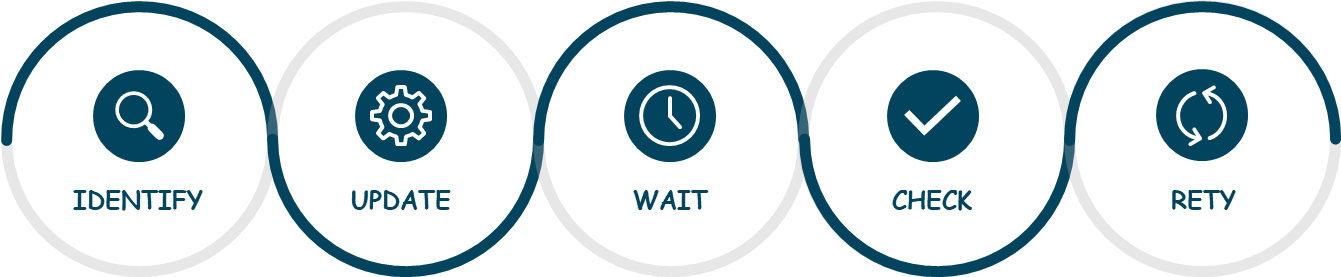
The time is not spent creating content.
It is spent maintaining alignment.
Moving from Requests to Processes
In many workflows, every content correction becomes a request to Amazon.
A team notices a mismatch, prepares the correct content, submits it, and waits.
If the change is not applied, the request is repeated.
This approach works occasionally but it does not scale.
As product portfolios grow, content maintenance shifts from individual corrections to continuous alignment. Instead of reacting to each issue separately, teams need a structured process that consistently compares the intended content with the live listing and applies updates when differences occur.
🏆 The goal is not to fix a single listing. It is to maintain many listings reliably over time.
How emax digital Helps
At emax digital, monitoring and correction are connected through a defined master content monitoring system.
When live content differs from the defined version, teams can apply updates across individual or multiple ASINs and verify whether changes were accepted.
This reduces the need to manually track each correction and helps maintain alignment over time.
If fixing content is slowing your team down, it’s time to move from requests to processes.
Let’s talk about how structured control can scale with your portfolio.